
Hades
My review for the godlike roguelike, one of the most influential games of the decade, which took me about three years to complete. Still, I enjoyed every minute of it!
Back when I purchased my Nintendo Switch in 2023, there were only a few titles I cared about trying on it. Among the first games I purchased at the time was Hades, released in 2020, developed by Supergiant Games.
Hades had already made a name for itself, as a title that redefined the genre and the medium, in manners that only a few get to do. It happened with Ocarina of Time and 3D action combat, with Halo’s controller layout for FPS games, with Super Metroid and Castlevania: Symphony of the Night, giving birth to a genre that has flourished with iconic titles known to all. It’s a work that left a mark this decade already.
Roguelikes have been around for ages, and I have tried and played a fair share of them, even if none have quite landed for me until now, I could appreciate what they do. I wrote a bit about roguelikes a while ago if you want some more thoughts about them. Some interesting comments on that post as well!
Alas, Hades is very different.
A roguelike is a game where you have to complete without dying. If you do, multiple elements of the game will be randomized and procedurally generated. Item locations, rooms, enemies. Every playthrough is unique, every death permanent.
Most roguelikes are very much focused on forcing you to get better at the game. Something like Spelunky will rely on your ability to understand its mechanics a little more run after run, the rooms and levels may change, but the way the world works is the same always. You have to help yourself, improve yourself, try things and learn as much as you can so if you die, it will be a bit easier and you will have mastered the game enough to complete it, earn the victory yourself. This is the same for many other classic roguelikes, like Dungeon Cralw Stone Soup, Shattered Pixel Dungeons or Cataclysm: Dark Days Ahead
Something like Ember Knights, Dead Cells and Rogue Legacy will feature meta-progression. Items that will ease each run, with things like extra lives, more speed, better weapons, or regenerative health, benefits present in other roguelikes, but often lost forever by the next run. Some times those games may mix those benefits with caveats that add variation to each attempt too, and I’m sure others have tried to balance the game in similar ways.
One style can be way too difficult and repetitive for some players, while providing a true challenge and a real sense of getting good at it to others. While it can be unfair to lose hours of progress in a run, a game you will eventually complete because you keep unlocking new permanent upgrades and enemies don’t get any tougher, can end up feeling just as pointless.
Hades features meta-progression, choices and multiple paths to take so you can build up your moveset and make your way through rooms until you reach the end. But how does it justify this?
The story.
Most roguelikes have a very mild sense of story. Since you often die quickly, it doesn’t really matter, you just try again for no particular reason. This can be a deal breaker if the mechanics are not enough to hold your interest. This happened to me in the case of stuff like One Step From Eden, where I feel no reason to go through it, while others absolutely love the depth of its mechanics and nods to other games.
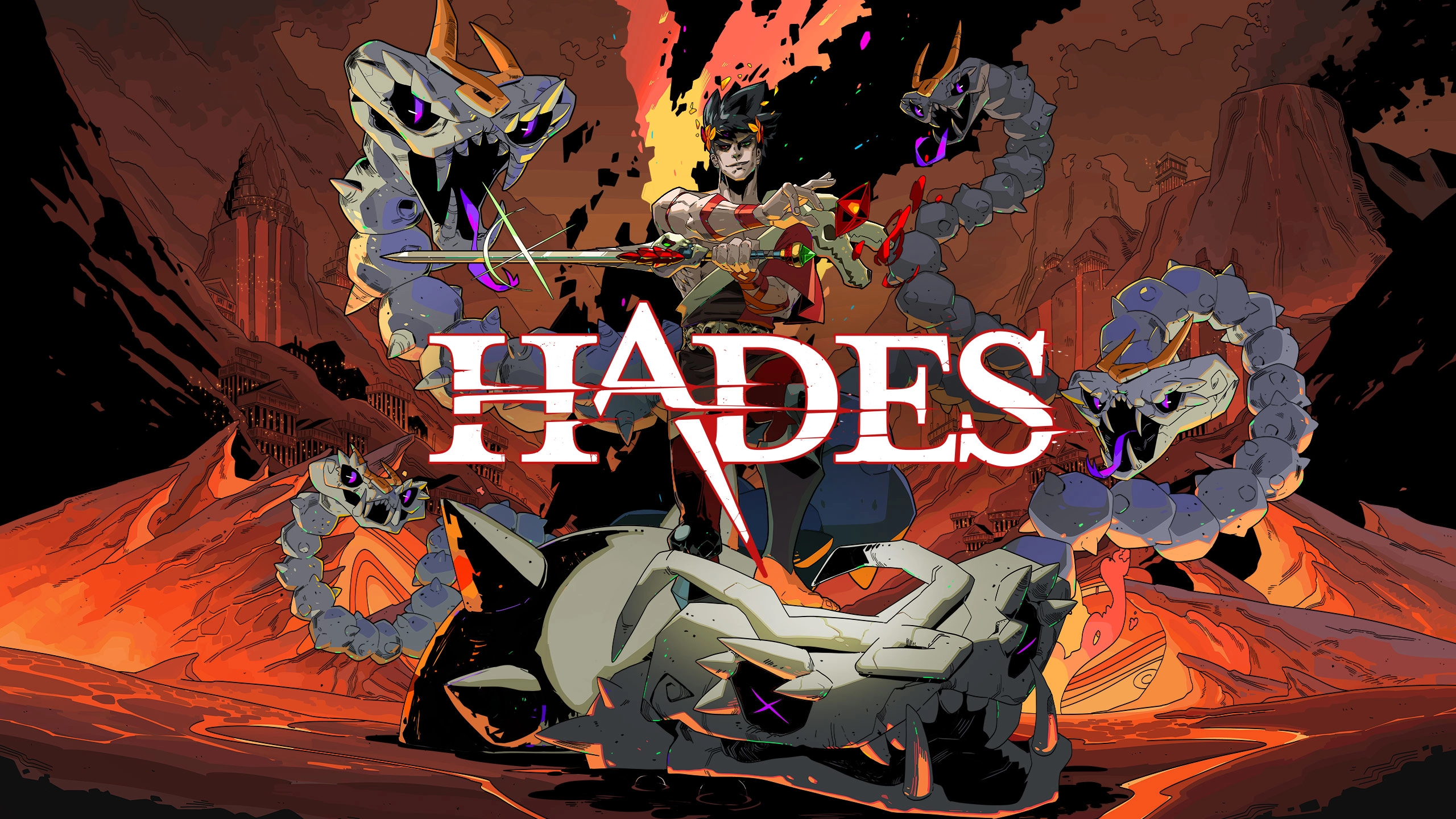
Hades has a story, where we follow Zagreus (or Zag), the son of Hades, ruler of the Underworld, as he attempts to reach Mount Olympus to reunite with the rest of his family. Going through every level of the Underworld, an endless maze of shuffling rooms and enemies that no mortal can escape from.
This is the basis on which everything is justified. Zag is escaping the house of Hades, everytime he tries to run away, the gods of Olympus aid him with boons: attack effects, better stats, more movement options, etc. There will also be rooms that reward you with weapon upgrades, or with different currencies to get permanent benefits.
Each god has something to say when giving you a boon, and each god will offer certain powers that can even synergize with those from other gods. They all have a different character and you will get to meet them better, as the story continues. Understanding the family dynamics of them all. Making for a really interesting form of story-telling.
Mechanically, each god is different too. Athena focuses on deflecting and defense, Poseidon can push away enemies with waves, Zeus has lightning chip damage that bounces through enemies, and the like.
There are plenty of other characters in each level of the Underworld, muses, fallen kings, forgotten warriors, people who will aid you in different ways. And of course, boss fights! I’ve already spoiled enough.
You can not actually die. Each time you lose, you are carried away by the Styx river, back to the House of Hades. And this is where the things get interesting. Since there is no fighting in the House, you can just interact and know characters there better, some who want to help you, some who are there to stop you.
These moments between runs are where most of the story will develop, where you will know why Zag wants to make it to the top, why the Olympians are aiding you at all, and understand more about the complicated relationship between Hades and his family. You can get to know and unlock more lore about each character, as well as obtain certain benefits by offering something to them in the game.
All of this is aided by some of the best artwork I have ever seen. Each character is portrayed in a fantastic way, and all of them are really cool. There is some fantastic voice work too, the talent and the effort put into all of this is amazing.
Featuring half a dozen weapons and a rather versatile moveset, each run is never the same, while at the same time, it kind of is. Here’s where Hades can make or break it for a player, as it essentially is a bit of a button masher when it comes to its gameplay…
You got your Dash, Attack, Special Attack and Cast, these are the four moves you get to do, each one varies depending on your weapon and there’s some combos for each, also affected by whatever weapon upgrade you may get during a run. The truth remains the same, most of the time you’ll dash dash attack, dash dash special, dash dash attack, cast cast cast, rinse and repeat.
This is not a bad thing by itself. The game will hook you and get you in a focus state where you will evade your way through everything and anihiliate everyone and you won’t even realize it. But that’s if you get good…
The game is also quite difficult. There are no one-hit kills or anything, but the environment and traps and constant damage will eventually get to you if you are not careful. This can be really rough, and will stop a lot of people on their tracks. It took me about thirty runs before I finally reached the end, and no, I did not win that final boss fight until later.
The game features one helpful feature for this: Godmode. A tickbox in the pause menu that increases your defense by 2% each time you die.
Of course, Hades wants you to die multiple times to keep seeing more of the story, and accepting each defeat as part of the cycle is kind of important. This is a game where reaching the final boss fight is not really the end goal. Even after you win, there will be reasons to keep going, and more interactions to be had after each death or victory.
The story is full of revelations and very interesting developments, there are also other side plots that make you care about some of the side characters you meet along the way. I reached the end of some of them, but not all, before I reached credits, and it’s one of the things that I am interested on returning to, if I’m honest.
Just like the artwork, the music is outstanding as well. A very epic score that gets the heart pumping during those epic battles. Where screens are full of enemies and projectiles fill up the screen. The game is excellently optimized for Nintendo Switch, running at 60 fps despite the amount of assets loaded up. It has a hiccup here and there, but nothing significant.
The bad
- The gameplay can feel repetitive if you don’t change up weapons or strategy.
- The difficulty can be really high if you don’t enable Godmode.
- Difficult cannot be manually configured, no difficulty options.
- Button mashing can end up actually hurting you if you go too hard with it.
- Not all strategies and boons are as good as others, some runs will be just bad.
- Meta-progression can be a deterrent for some people.
The good
- The gameplay can hook you and get you into a flow state.
- The challenge is always there and can be amped up later to counteract permanent upgrades.
- Godmode allows you to ease the burdens of the game over time as you continue to experience the story.
- The characters, writing, artwork, animation, music and overall production of this game is top notch.
- You can choose a variety of weapons catering to different styles of play.
- Meta-progression and Godmode ensures you can eventually get to the end of the game with some persistence.
- The story is simply fantastic and worth experiencing.
Some tips and reminders
- Athena’s boons are awesome, use them
- Try every weapon, one is bound to be great for you, my favorite was the bow
- Talk with everyone every time you die, you can technically skip this, but why would you deny yourself the awesome interactions?
- If a run is bound to be bad, try to focus on resource gathering! It will often help you more.
Final thoughts
I played through the game in a span of three years, so even though I was never fully hooked by it, I was interested on trying it and getting to complete it, and I am glad I gave it the time. Even during the span of times where I didn’t touch the game at all, it remained in my memory, and every time I returned to it, I would often spend two or three hours in a day, making progress, it was just that sort of game for me.
What is there to say about Hades that hasn’t been said? It is a roguelike with excellent mechanics that are absolutely justified within the story, and because of that, it was never tiring for me to go through the motions. The gameplay did hook me for hours at a time, always going for two or three runs whenever I had the chance. I was not helplessly addicted to it like some people who played it like 400 hours, but I got about 40 hours of playtime myself before I finally reached the credits, and saw the conclusion of the story.
There is still an epilogue, it seems, that will tie up some more knots, and side plots I would like to conclude, but I am fine writing about the game by now. It was a wonderful time, and I really recommend giving it a go!
This is day 81 of #100DaysToOffload
Backlinks
- Summer Game Challenge 2026 results! on September 15, 2026
- Gaming Updates (Summer 2026) on July 23, 2026
Comments
If you have something to say, leave a comment, or contact me ✉️ instead
Reply via Fediverse
You can reply on any Fediverse (Mastodon, Pleroma, etc.) client by pasting this URL into the search field of your client:
https://fosstodon.org/@joel/116771003276423641

Are you looking for more? Here's some more great content for those who dare scroll down this section of the page. Suit yourself!


